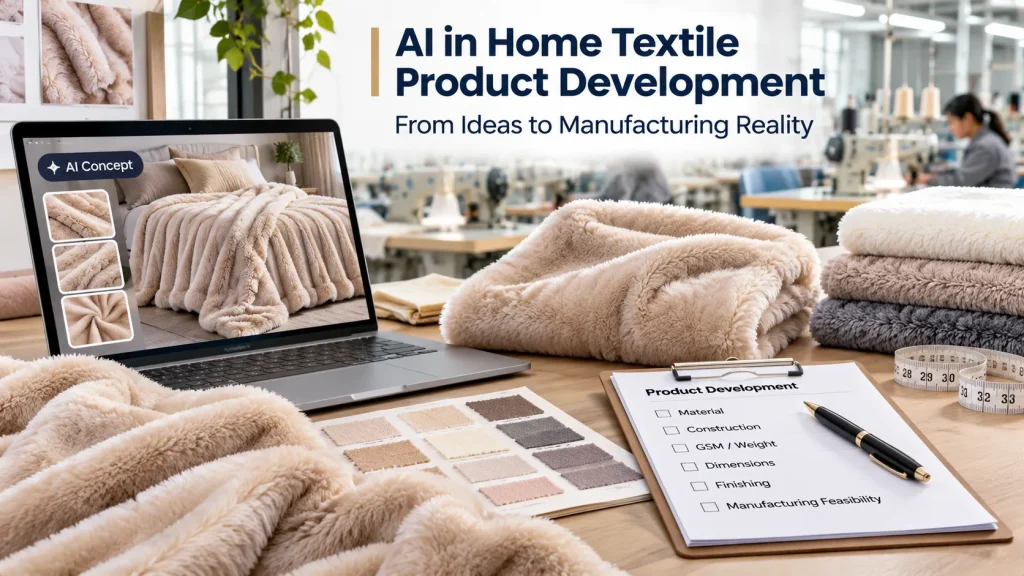
Artificial intelligence is creating new possibilities in AI in Textile Product Development.
A product image can look perfect on screen. The texture is appealing, the proportions seem right, and every detail appears to match the original idea. But when a buyer starts discussing the product with a manufacturer, a different question appears:
Can it actually be made well?
AI-generated images can help brands explore product ideas faster and communicate visual expectations that may once have been difficult to explain through words or reference samples.
But a convincing image does not automatically translate into a practical home textile product. Materials, GSM or finished product weight, construction, dimensions, finishing methods, performance expectations and target cost all influence the final result.
The real challenge is not simply reproducing an image. It is understanding the buyer’s intention, evaluating the manufacturing feasibility behind the visual concept, and finding a practical route from digital idea to physical product.
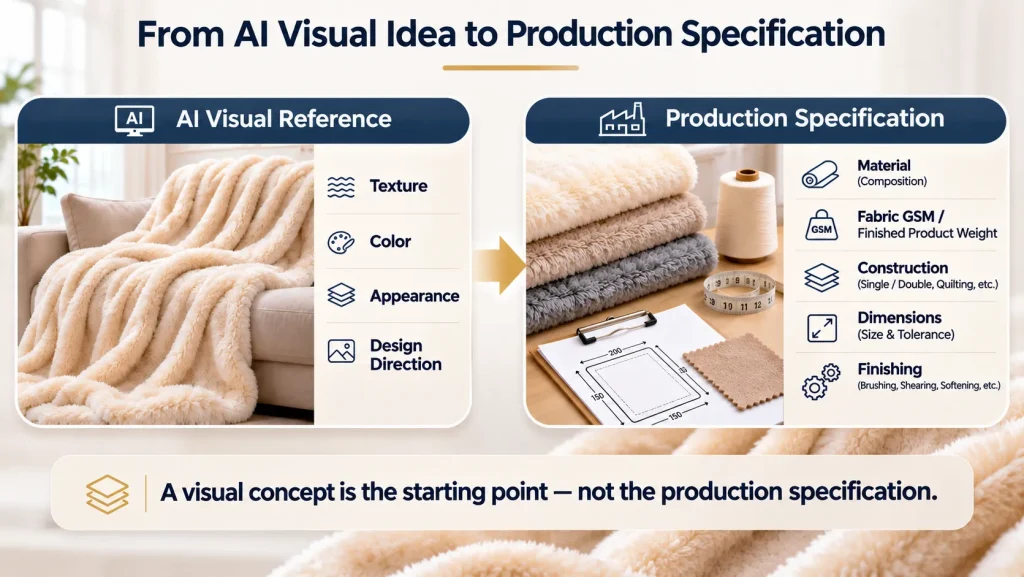
An AI-generated textile image is a visual reference – not a production specification. Manufacturing still requires defined materials, construction, dimensions, weight, finishing and quality requirements.
1. AI Has Changed How Home Textile Product Ideas Take Shape
For product teams, one of the most useful aspects of AI is the ability to explore visual directions before committing to a specific design.
A buyer developing a new blanket collection can compare different surface textures, color combinations and decorative effects in a relatively short time. Bedding brands can explore patterns, quilting directions and coordinated colors, while curtain collections can be visualized through different fabric appearances, drape and room settings.
This makes early-stage discussions more visual. Instead of relying entirely on written descriptions or reference samples, teams can use AI-generated textile designs to communicate what they have in mind.
A visual reference may also help a manufacturer understand preferences that are difficult to explain in words, such as the desired softness, surface character, fullness, drape or overall design mood.
However, the image should be treated as a starting point for development rather than a complete instruction for production. It can communicate an intended appearance, but the physical materials and construction behind that appearance still need to be defined.
Used in this way, AI can make early product development more exploratory and collaborative without replacing the manufacturing decisions that come later.
2. Where a Digital Design Meets Manufacturing Reality
A digital image can show the appearance of a textile product in considerable detail. What it cannot establish on its own is how that product will behave as a physical item.
| An AI Image Can Communicate | Manufacturing Still Needs to Define |
| Visual texture and surface direction | Actual fabric composition, pile construction and finishing method |
| Color palette and overall appearance | Dyeing / color route, color reference and repeatability |
| Apparent thickness or fullness | GSM, finished product weight and physical construction |
| Product proportions | Finished dimensions, seam placement and production tolerances |
| Decorative effect | How the effect will actually be produced and whether specialized setup is required |
| Overall concept or mood | Performance, cost, MOQ, sampling requirements and production feasibility |
Two fabrics may look similar in an image but feel very different in use. A texture that appears simple on screen may require a different pile construction, backing, stitching or finishing process from what the picture seems to suggest.
Manufacturing feasibility is not only about whether an effect can technically be produced. It also involves whether the finished product can meet the buyer’s expectations for hand feel, function, quality, target cost and repeatability in bulk production.
A design may be technically achievable while still being too heavy, too stiff, too expensive or commercially impractical for the intended market. In other cases, adjusting one or two details can preserve the main design idea while making the product more suitable for production.
The objective is not to change a design simply because it presents a challenge. It is to identify which features define the concept and where practical adjustments can improve the final product.
3. A Common Development Scenario: A Double-Sided Faux Rabbit Fur Blanket
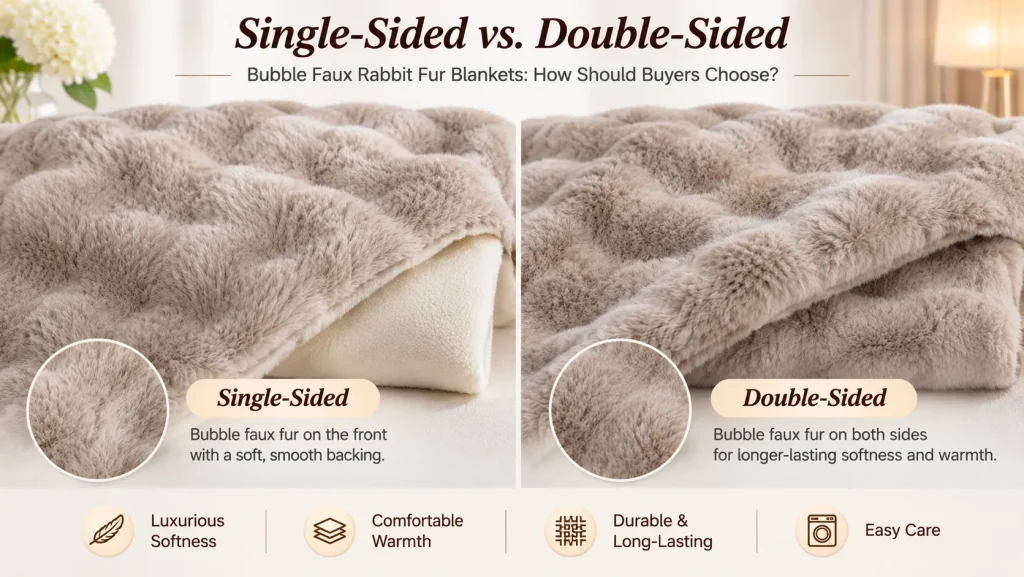
Consider a common development scenario in which a buyer presents an AI-generated concept for a double-sided faux rabbit fur blanket.
The image shows both sides as exceptionally full and plush, creating the impression of very high fabric weight and volume on each surface.
Visually, the concept is attractive. From a manufacturing perspective, however, the combined construction raises several questions.
- How heavy would the finished blanket become if both sides used very high-GSM plush fabric?
- Would the combined thickness affect drape, flexibility or user comfort?
- Would the intended pile appearance remain stable once two dense constructions are joined?
- Would the resulting material consumption and processing remain commercially practical for the intended product?
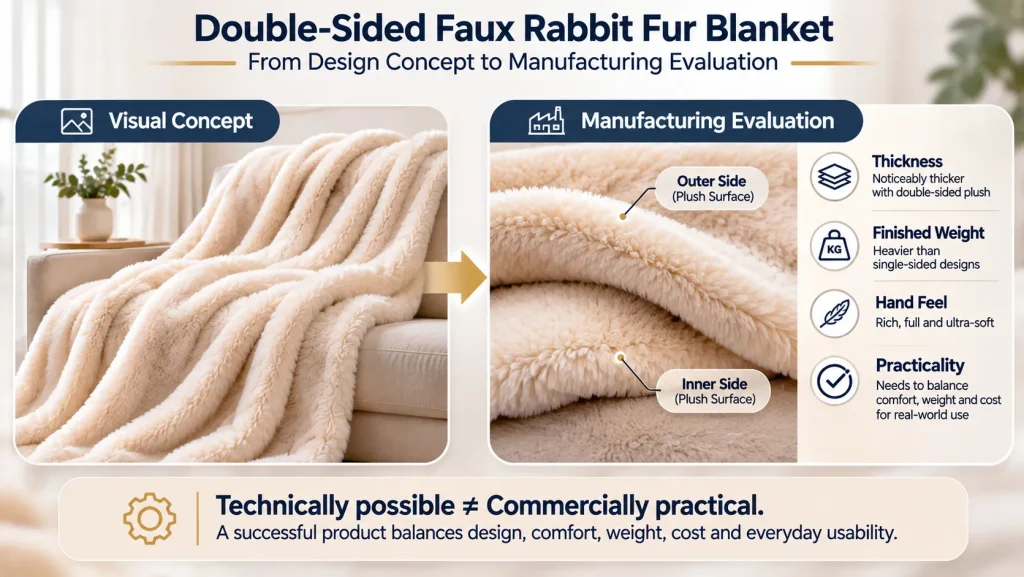
The issue is not whether a double-sided faux rabbit fur blanket can be manufactured. The more useful question is whether this particular combination of visual features, materials and fabric weight would produce a satisfactory finished product.
This illustrates a broader point in AI-assisted product development: an image can combine features that look appealing individually, but those features do not always work equally well together in a physical textile product.
A manufacturer therefore needs to identify what the buyer values most. Is the priority the fullness of the surface, softness, the two-sided effect, the overall appearance, a particular finished weight, or a target retail position?
Once those priorities are clear, development can focus on preserving the product-defining idea while evaluating a practical construction around it.
This section illustrates a general manufacturing scenario and is not a disclosure of a specific customer project.
4. Different Home Textile Categories Require Different Development Decisions
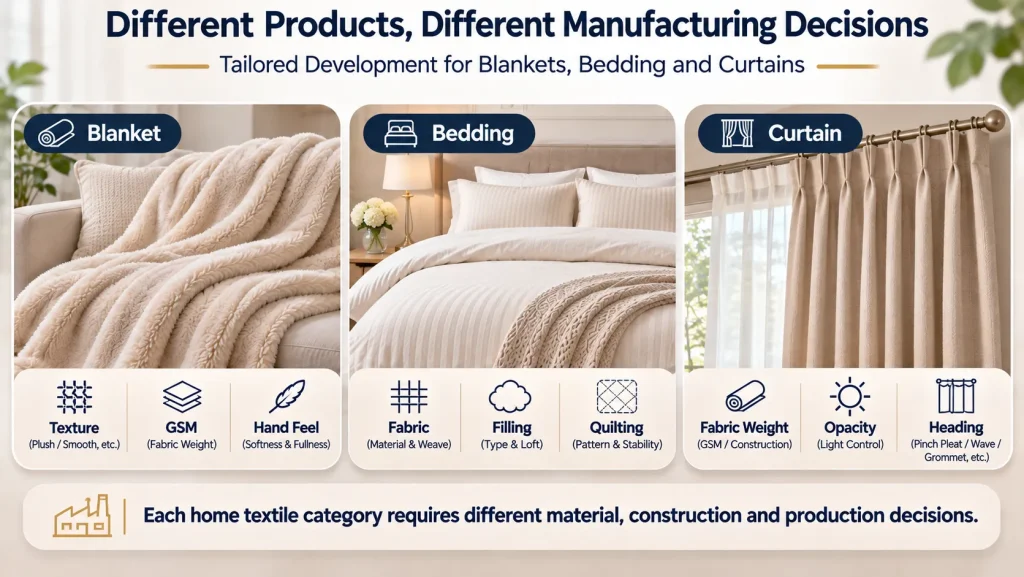
The same principle applies beyond blankets. AI can help visualize many home textile concepts, but each product category has its own manufacturing questions.
| Product Category | AI Can Help Visualize | Manufacturer Must Evaluate |
| Blankets | Surface texture, color, fullness, pattern and two-sided visual effects | Fabric construction, pile, GSM / finished weight, hand feel, seams, finishing and usability |
| Bedding | Patterns, coordinated colors, quilting appearance and styling | Face fabric, filling, quilting construction, stitching, dimensions, washing requirements and assembly |
| Curtains | Room effect, color, apparent drape, texture and opacity | Fabric weight, actual opacity, width, heading construction, drape, finishing and installation requirements |
These are not secondary technical details added after design. They are part of translating a visual concept into a product with the intended appearance and practical performance.
This is also why the same AI workflow should not be applied mechanically across blankets, bedding and curtains. The visual concept may begin in the same way, but the manufacturing questions are different.
5. From AI Concept to Production: Where the Manufacturer Adds Value
A manufacturer does not need to take over the creative direction of a product. The more useful role is to translate the buyer’s visual intention into clear development decisions.
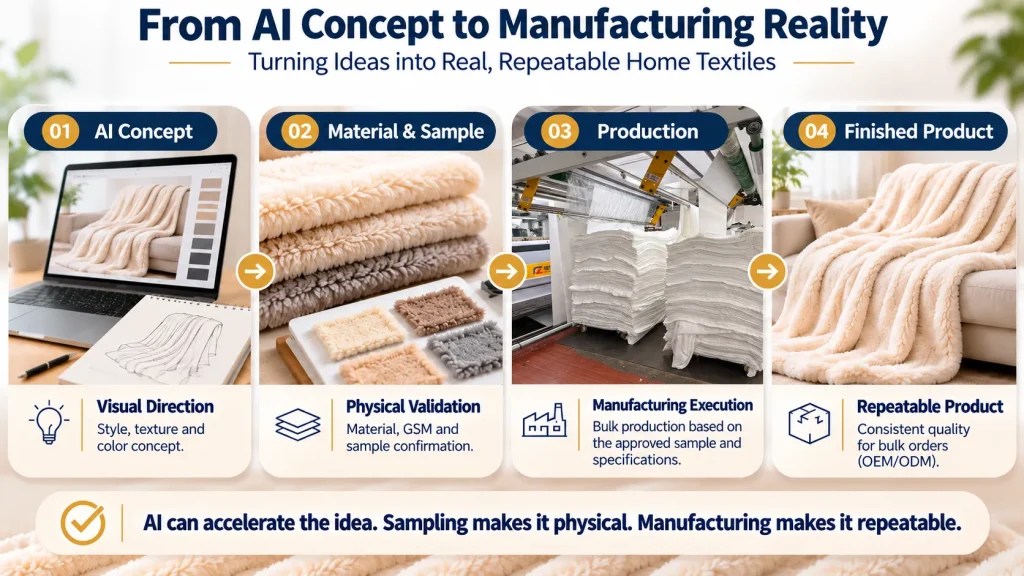
Step 1 – Clarify What the Image Is Trying to Communicate
The first discussion should identify the features that actually define the concept: surface texture, color, hand feel, functional performance, construction, overall price position or another non-negotiable characteristic.
Step 2 – Evaluate Manufacturing Feasibility
An experienced textile manufacturer can review suitable materials, construction routes and finishing methods, and identify where the visual concept may conflict with physical product requirements.
Step 3 – Turn the Visual Idea Into a Physical Sample
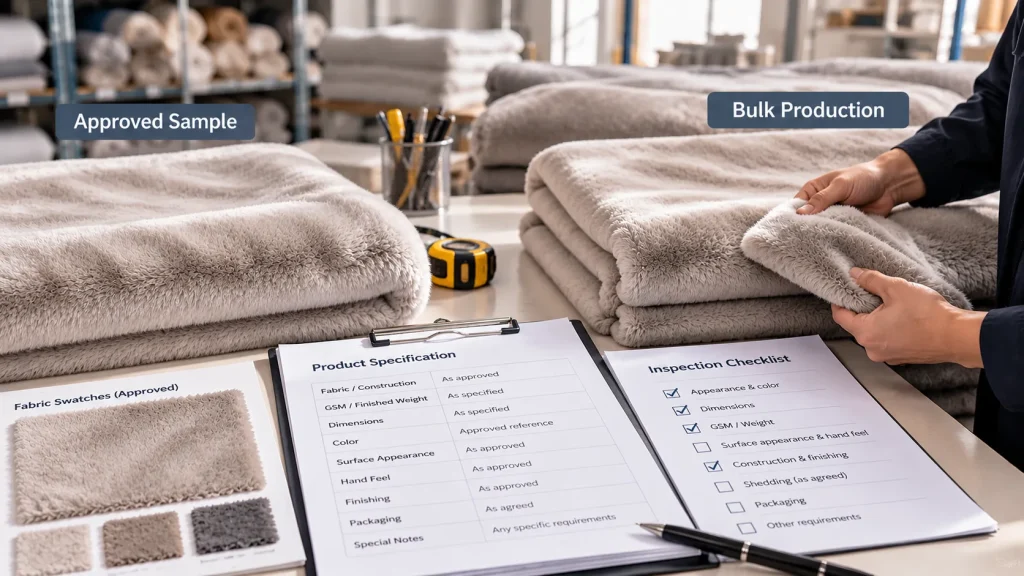
Sampling provides the point where a digital concept becomes something the buyer can actually touch, measure and evaluate. The buyer can review fabric, hand feel, GSM or finished weight, dimensions, appearance and workmanship, and compare the sample with the original design intention.
Step 4 – Finalize the Production Specification
Once the sample direction is approved, the key materials, construction, dimensions, finishing, customization and relevant quality requirements should be recorded clearly. This is where the AI concept stops being only a visual reference and becomes a production-ready specification.
Step 5 – Carry the Approved Product Into Bulk Production
Bulk manufacturing then needs to follow the approved sample and confirmed specifications. If the design has been adjusted during development, the production team should work from the final approved product reference rather than the original AI image alone.
At Apex Textile Mill, home textile product development involves more than selecting a fabric or reproducing a reference image. From material selection and sampling to custom design, private label and production coordination, the aim is to help buyers evaluate creative concepts against real manufacturing conditions before moving into bulk production.
6. Better Ideas Need More Than Better Images
AI is changing how home textile ideas are explored, and this can be a positive development for brands and manufacturers. It gives product teams more ways to experiment, communicate and refine a creative direction before committing to physical development.
But a strong product is built through more than visual appeal. It needs to make sense in terms of materials, construction, function, cost, quality and production.
Buyers bring market knowledge and the vision for what they want to create. AI can make that vision easier to explore and communicate. Manufacturers contribute the practical understanding needed to evaluate materials, processes and what can be repeated consistently at scale.
For brands developing blankets, bedding or curtains, the goal should not be to choose between creative freedom and manufacturing practicality. It should be to bring the two closer together so that promising ideas have a clearer path from visual concept to physical product.
AI can accelerate the idea. Sampling proves the physical product. Manufacturing defines what can be repeated in bulk.
Frequently Asked Questions
Yes, many AI-generated textile concepts can be developed into physical products. However, materials, construction, finishing methods, dimensions, cost and production requirements still need to be evaluated. The final product may require adjustments to achieve a suitable balance between appearance and manufacturing feasibility.
Key factors include fabric composition, material availability, GSM or finished product weight, product construction, manufacturing processes, quality requirements, order quantity, target cost and intended use. Their importance varies by product category.
A textile manufacturer can help evaluate reference designs, discuss suitable materials and construction methods, develop samples, review manufacturing constraints and prepare approved specifications for bulk production. Early communication can reveal issues that are not visible in a digital concept.
A sample allows buyers to evaluate a product in physical form rather than relying only on an image. It provides an opportunity to check fabric, hand feel, GSM or finished weight, dimensions, appearance and workmanship, and to make necessary adjustments before bulk production.
Developing a Home Textile Product From an AI Concept?
Share your AI-generated concept, reference image or design direction together with the product category, preferred material or hand feel, target dimensions, intended market, target quantity and any features that are essential to the concept.
Apex Textile Mill can review the development requirements with you, discuss practical material and construction routes, and help move the concept from visual reference through sampling toward a production-ready specification.