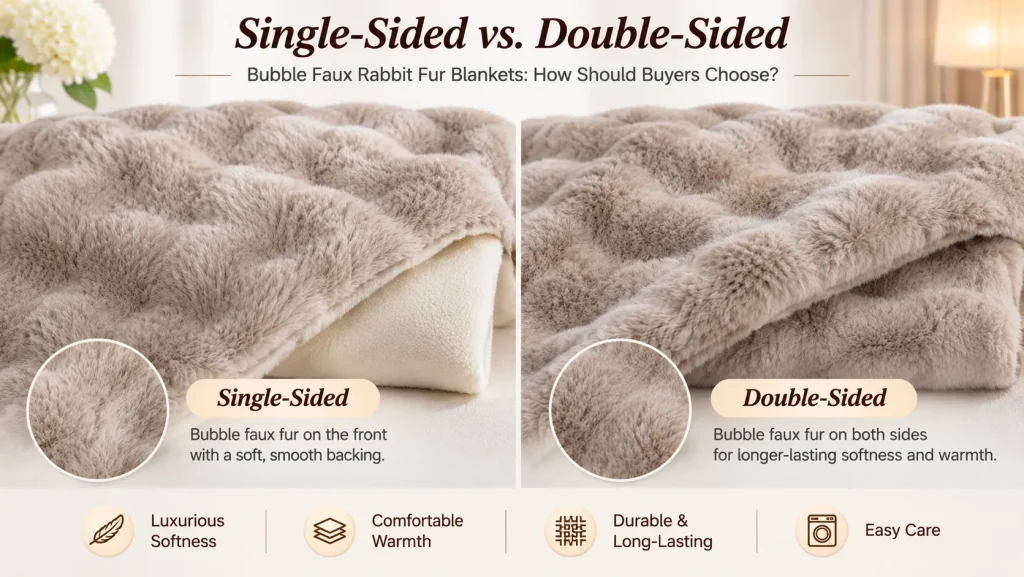
The sample looks right. The hand feel meets expectations, the color is approved, and the buyer confirms the product.
But when the bulk order is ready for inspection, the buyer notices more shedding than expected.
For brands, retailers and importers, this raises an important question: how can they assess faux rabbit fur blanket quality and reduce the risk of differences between approved samples and bulk production?
The answer starts with clear sample approval, written product specifications and agreed inspection criteria. Together, these provide a practical reference for evaluating bulk orders and resolving quality concerns.
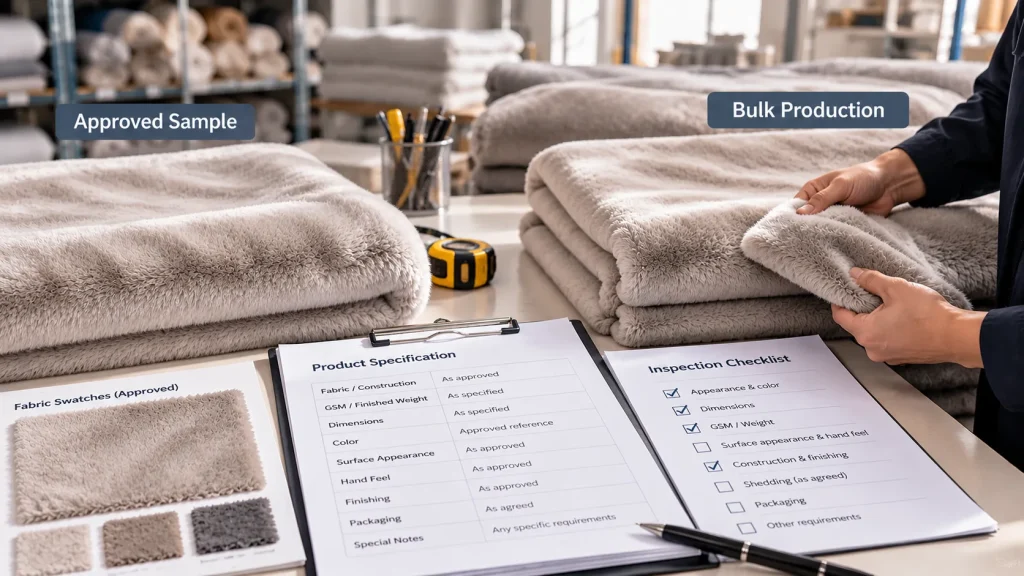
1. Why Sample Approval Is Not Enough
Sample approval establishes the product reference, but it does not replace written specifications or agreed inspection criteria.
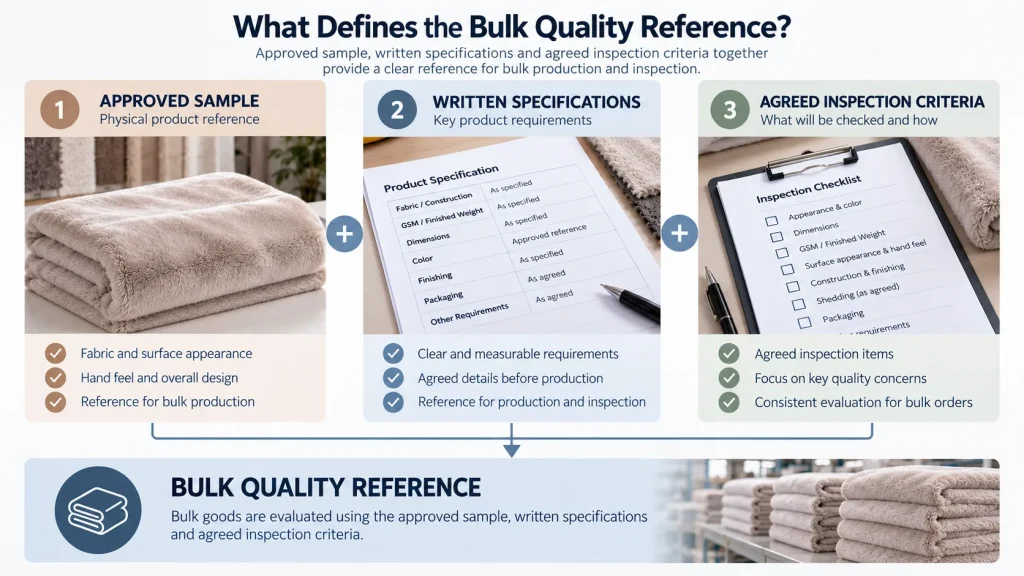
Effective blanket sample approval should establish a clear product reference before bulk manufacturing begins. This reference should be supported by written specifications and agreed inspection criteria.
A sample allows buyers to evaluate the fabric, appearance, hand feel and overall product design. However, buyers and manufacturers also need a shared understanding of the requirements that will apply to bulk production.
For faux rabbit fur blankets, this may include:
Fabric composition and construction
Finished dimensions and GSM or finished product weight, where applicable
Color and surface appearance
Pile texture and hand feel
Edges, stitching, labels and packaging
Any specific quality concerns identified during sample review
These details help both parties understand what was approved and what should be checked during production and final inspection.
The objective is to establish clear, agreed requirements so that bulk production can be evaluated against the approved product reference and applicable specifications.
2. What Should Buyers Confirm Before Blanket Production?
Before confirming a bulk order, buyers should document the main product requirements and identify any characteristics that need particular attention.
| Checkpoint | What to Confirm | Why It Matters |
| Fabric and construction | Material composition, fabric type and construction | Establishes the agreed product reference |
| GSM / finished product weight | Target GSM or finished product weight, where applicable | Helps maintain consistency with the approved specification |
| Dimensions | Finished length and width | Reduces the risk of size discrepancies |
| Color and appearance | Approved color, surface texture and overall appearance | Provides a reference for visual inspection |
| Pile and hand feel | Expected softness, pile appearance and texture | Helps clarify subjective quality expectations |
| Finishing | Edges, stitching, labels and other details | Ensures product-specific requirements are included |
| Quality concerns | Any known concerns, including shedding | Helps determine where additional attention may be needed |
Clear specifications also make blanket inspection more practical. For faux rabbit fur blankets, buyers and manufacturers should discuss shedding expectations and identify the relevant checks before bulk production begins.
Not every product requires the same inspection approach. Buyers and manufacturers should agree on the relevant checks based on the product, its intended use and the requirements of the order.
For faux rabbit fur blankets, it is particularly useful to discuss shedding expectations before production rather than waiting until the finished goods are ready for shipment.
3. Faux Rabbit Fur Blanket Shedding: What Should Buyers Look For?
Faux rabbit fur blanket shedding is a quality concern worth discussing during sample approval because the pile surface is an important part of the product’s appearance and hand feel.
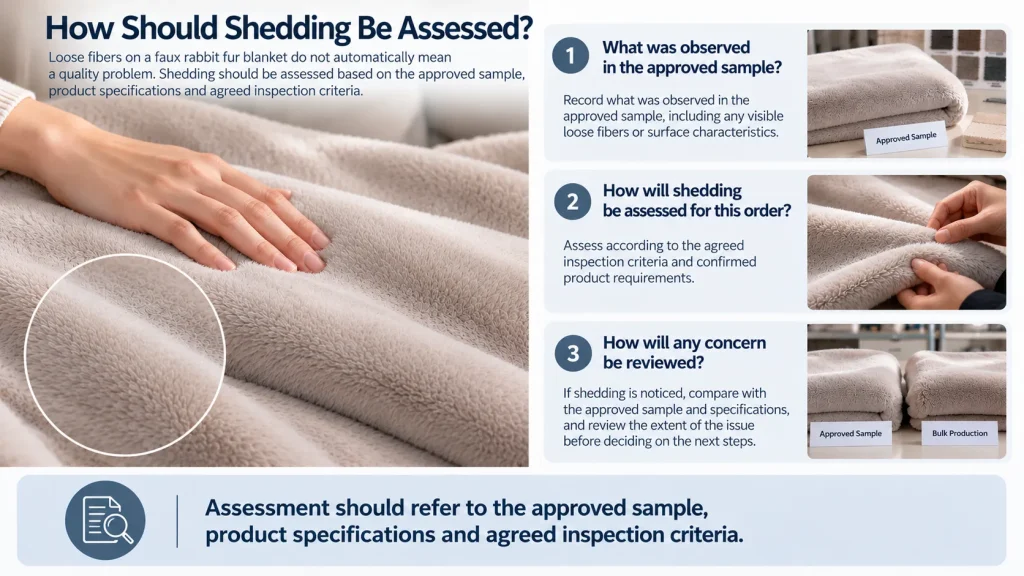
However, the presence of loose fibers alone does not establish whether a product meets or fails the agreed requirements. The assessment should consider the approved sample, the product specifications and the inspection criteria agreed for the order.
Buyers and manufacturers should clarify three points.
What was observed in the approved sample?
Record any shedding concerns identified during sample evaluation. This provides useful context when reviewing the bulk goods.
How will shedding be assessed for the order?
Discuss expectations before production and agree on an appropriate assessment approach. Avoid relying on vague descriptions such as “minimal shedding” without clarifying what the parties mean or how the concern will be reviewed.
How will concerns be reviewed?
If shedding is identified during production or final inspection, document the observation and compare the affected goods with the agreed product reference. Further assessment may be necessary before deciding on corrective action.
Clear communication at the sample stage helps reduce misunderstandings later, particularly when the buyer and manufacturer have different expectations of the finished product.
4. How to Maintain Blanket Quality Control Through Bulk Production
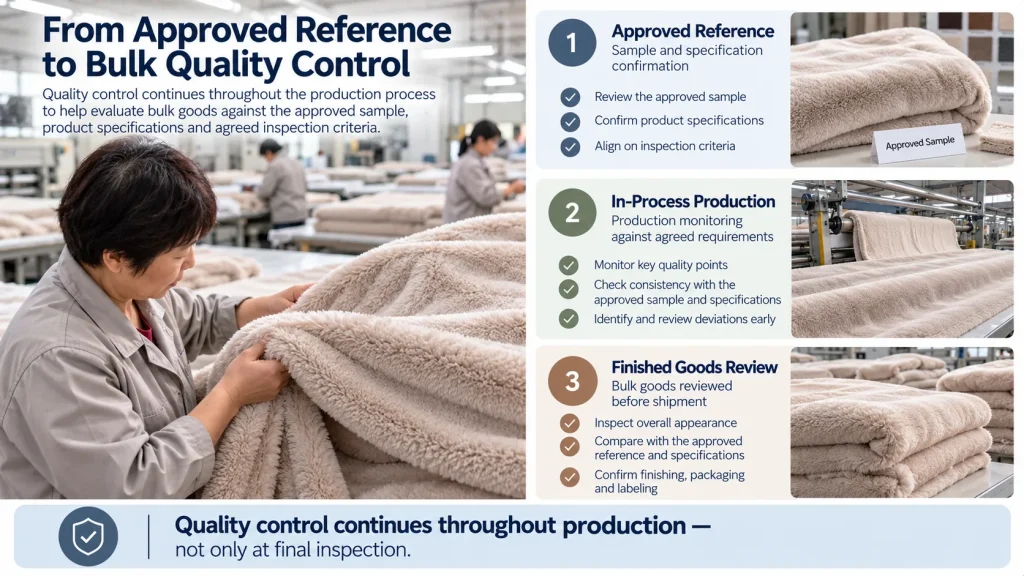
Effective blanket quality control covers three stages: before production, during production and before shipment. A planned inspection process helps buyers and manufacturers evaluate the bulk goods against the specifications and acceptance criteria agreed for the order.
Before Production: Confirm the Requirements
Before bulk manufacturing begins, the buyer and manufacturer should confirm the approved sample, product specifications, customization details and agreed inspection criteria.
Any concerns raised during sample review should be documented so that the production and quality teams understand what requires attention.
This stage establishes the reference for subsequent checks.
During Production: Check Against the Agreed Specifications
Quality checks during production help identify potential discrepancies before the entire order is completed.
Depending on the product and order requirements, checks may cover fabric appearance, dimensions, GSM or finished product weight, stitching, finishing and other agreed characteristics.
If a concern arises, the manufacturer should review the issue, communicate with the buyer where necessary and determine whether further assessment or corrective action is appropriate.
Addressing concerns during production can provide more options than discovering them only after the goods are finished.
Before Shipment: Complete the Final Inspection
Final inspection provides an opportunity to assess the finished goods against the agreed requirements.
The inspection should focus on the product characteristics and acceptance criteria established for the order. Any findings that may affect acceptance should be documented and reviewed before the next step is agreed.
Keeping clear records helps both parties understand the inspection results and supports more informed decisions about shipment and any necessary follow-up.
5. What If Shedding Is Found During Final Inspection?
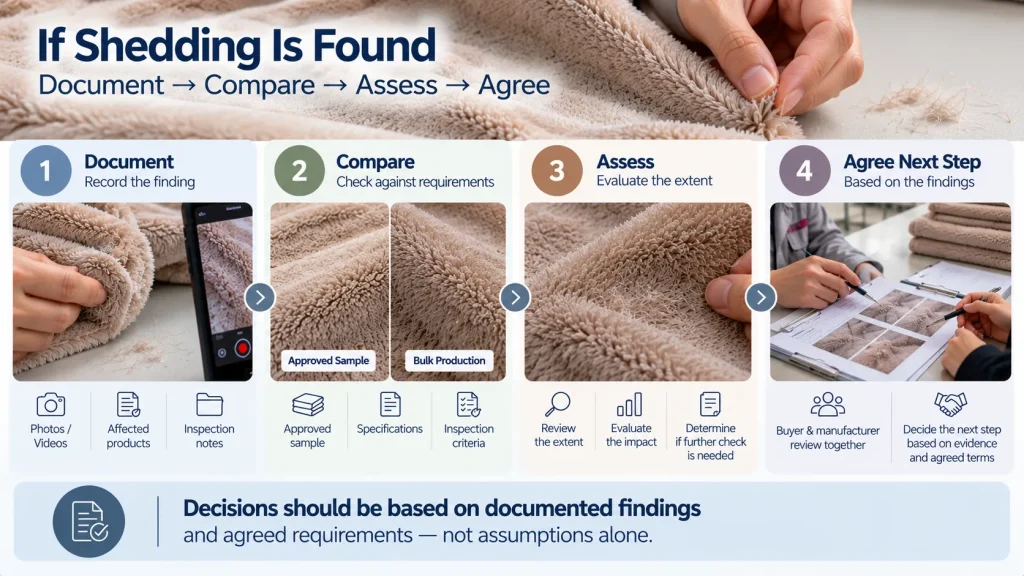
During bulk blanket inspection, finding more shedding than expected does not automatically establish whether the order passes or fails. Buyers and manufacturers should document the findings, compare them with the approved sample and agreed requirements, and determine whether further assessment is needed.
A practical approach includes four steps:
- Document the finding. Record the affected products, observed condition and relevant inspection details. Photographs or videos may help illustrate the concern.
- Compare with the reference. Review the approved sample, written specifications and agreed inspection criteria.
- Assess the concern. Determine whether further inspection or evaluation is needed to understand the extent of the issue.
- Agree on the next step. Based on the findings, the buyer and manufacturer can discuss appropriate corrective action, additional inspection or other arrangements.
The response should reflect the actual condition of the goods and the terms agreed for the order. Clear records and timely communication help keep the discussion focused on evidence rather than differing assumptions.
6. How Apex Textile Mill Supports Blanket Quality Control
For custom blanket programs, quality control begins with confirming product requirements and continues through production and final inspection.
Apex Textile Mill works with buyers to confirm product specifications, review and approve samples, carry out quality checks during bulk production and conduct final inspections.
When quality concerns arise, the team communicates with customers to review the findings and discuss the appropriate next steps. Relevant inspection findings and records can be documented and shared with customers where required for the order.
Inspection arrangements depend on the product and customer requirements rather than one universal procedure for every blanket. This allows the relevant checks to be discussed according to the product specifications and the buyer’s quality expectations.
For buyers developing custom faux rabbit fur blankets, clarifying these requirements early helps establish a more practical basis for sample approval, bulk inspection and communication throughout the order.
Conclusion
Effective faux rabbit fur blanket quality control depends on more than approving a sample. Buyers and manufacturers also need clear product specifications, agreed inspection criteria and a consistent approach to reviewing quality concerns during bulk production.
For shedding concerns in particular, discussing expectations before production and documenting findings during inspection can help reduce misunderstandings and support better decisions.
The goal is not to treat sample approval as a substitute for bulk quality control, but to establish a clear reference for evaluating the finished goods and addressing any differences constructively.
Frequently Asked Questions
No. Sample approval establishes the product reference, but bulk quality should also be evaluated against the written specifications and inspection criteria agreed for the order.
Not necessarily. The assessment depends on the observed condition, the approved sample, the product specifications and the agreed acceptance criteria. Any concern should be reviewed in context.
Quality checks can take place before production, during manufacturing and before shipment. The specific checks should reflect the product and the requirements agreed by the buyer and manufacturer.
Document the finding, compare it with the approved sample and agreed requirements, and arrange further assessment if needed. The buyer and manufacturer should then discuss the next step based on the inspection results and their agreed terms.
Planning a Custom Faux Rabbit Fur Blanket Program?
Share your target fabric, dimensions, GSM or finished product weight where applicable, customization requirements and quality concerns. Our team can discuss sample development, production arrangements and inspection expectations for your project.